2026 Icons
- Giorgio Armani
- Gabriel Attal
- Alvin Baltrop
- Frieda Belinfante
- Michael Bennett
- Rachel Crandall-Crocker
- Barry Diller
- Ernestine Eckstein
- Laïla El-Métoui
- Edward Enninful
- Andrea Gibson
- Marsden Hartley
- Muhsin Hendricks
- Patricia Highsmith
- Robert Joffrey
- Julie Johnson
- Lani Ka’ahumanu
- King James I
- Calvin Klein
- Abraham Lincoln
- Chris Pappas
- Pauline Park
- Paul Rudolph
- Amber Ruffin
- St. Vincent
- Jessica Stern
- Charles Sumner
- Jewel Thais-Williams
- Karl Heinrich Ulrichs
- Alok Vaid-Menon
- Edmund White
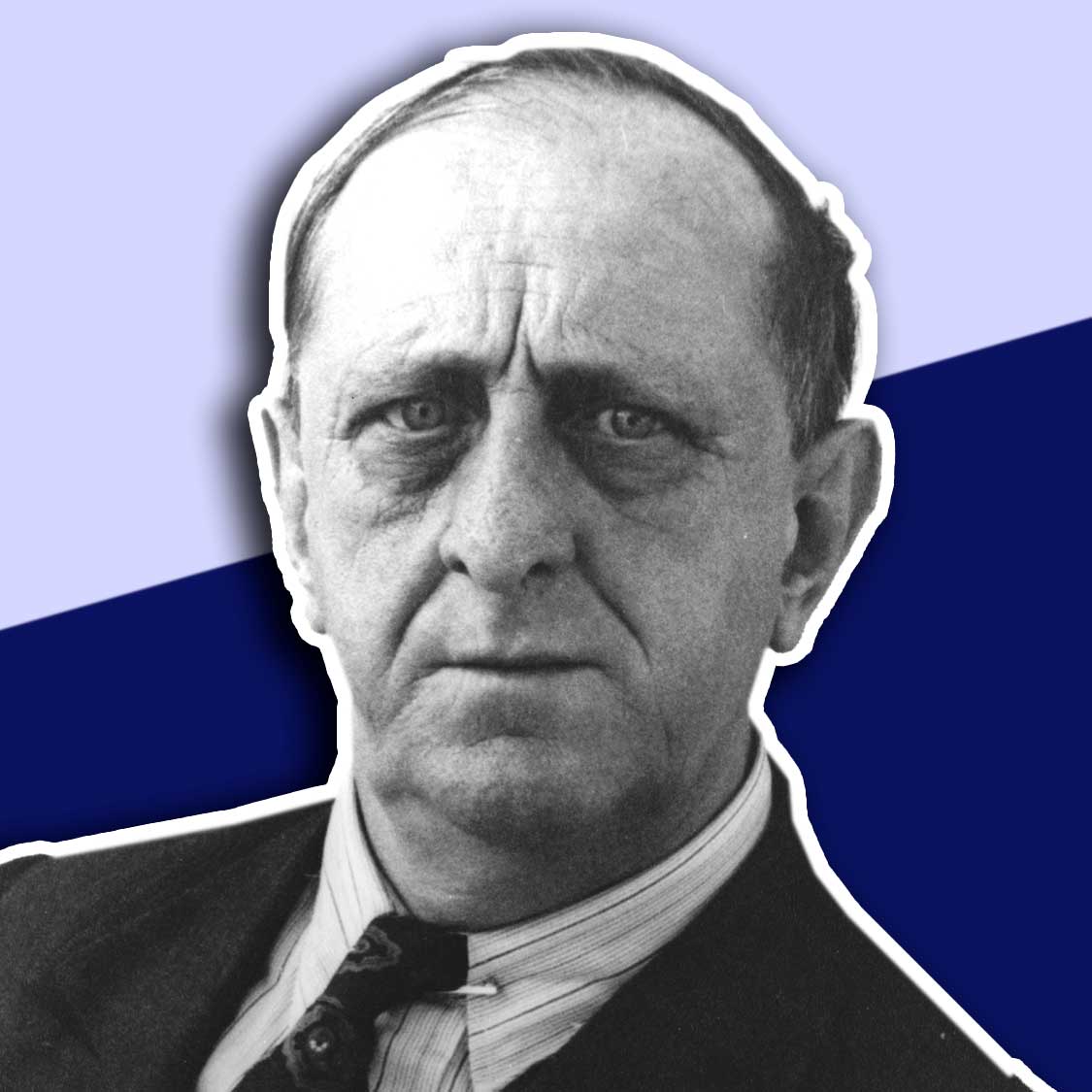
Marsden Hartley
2026 Icon
Marsden Hartley
Modernist Painter
b. January 4, 1877
d. September 2, 1943
“It is never difficult to see images — when the principle of the image is embedded in the soul.”
Marsden Hartley was a 20th-century American painter, poet, and essayist. An early interpreter of European Modernism, he helped introduce elements of Expressionism and abstraction into American art. Best known for his landscapes, he was also among the first American Modernists to explore homoerotic themes.
Baptized Edmund Hartley, he was born in Lewiston Maine, the youngest of nine surviving children of English-immigrant parents. His mother died when he was 8. Four years later, his father remarried Martha Marsden.
Hartley studied with the landscape painter John Semon before earning a scholarship to the Cleveland School of Art. In 1899, he received a stipend to attend the William Merritt Chase School of Art in New York City. He transferred to the National Academy of Design, where, in 1902, he won its Suydam Silver Medal for still-life drawing. He later returned to Lewiston and traveled through western Maine, painting landscapes. To reinvent himself as a professional artist, he adopted the first name Marsden in honor of his stepmother.
After several exhibitions, Hartley captured the attention of the New York photographer and art promoter Alfred Stieglitz. In 1909, Stieglitz mounted the first of Hartley’s three solo exhibitions at his influential 291 gallery.
In 1912, Hartley traveled to Paris, where he met Gertrude Stein and her circle of avant-garde writers and artists. There, he met Karl von Freyburg, a Prussian lieutenant widely believed to have been his lover. Because same-sex relationships were criminalized, Hartley kept his sexuality private.
Hartley moved to Germany in 1913, where he was influenced by the Expressionist movement. A year later, von Freyburg was killed in World War I. Hartley memorialized him in a series of abstract paintings, including “Portrait of a German Officer” (1914). He encoded themes of homosexual desire in these and his figurative paintings later in life.
Hartley spent most of the 1920s in Europe painting still lifes and landscapes. In 1931, he relocated to New Hampshire and received a Guggenheim Fellowship, which supported his yearlong residence in Mexico.
After hopping around several locations, Hartley eventually settled in his home state, where he embraced his identity as “the painter from Maine.” In the late 1930s, he began painting muscular hypermasculine figures, inspired by sunbathers, fishermen, and laborers.
At 66, Hartley died of heart failure in Ellsworth, Maine. In addition to his painting, he was an accomplished writer whose work appeared in leading publications, including Vanity Fair and The New Republic.