2026 Icons
- Giorgio Armani
- Gabriel Attal
- Alvin Baltrop
- Frieda Belinfante
- Michael Bennett
- Rachel Crandall-Crocker
- Barry Diller
- Ernestine Eckstein
- Laïla El-Métoui
- Edward Enninful
- Andrea Gibson
- Marsden Hartley
- Muhsin Hendricks
- Patricia Highsmith
- Robert Joffrey
- Julie Johnson
- Lani Ka’ahumanu
- King James I
- Calvin Klein
- Abraham Lincoln
- Chris Pappas
- Pauline Park
- Paul Rudolph
- Amber Ruffin
- St. Vincent
- Jessica Stern
- Charles Sumner
- Jewel Thais-Williams
- Karl Heinrich Ulrichs
- Alok Vaid-Menon
- Edmund White
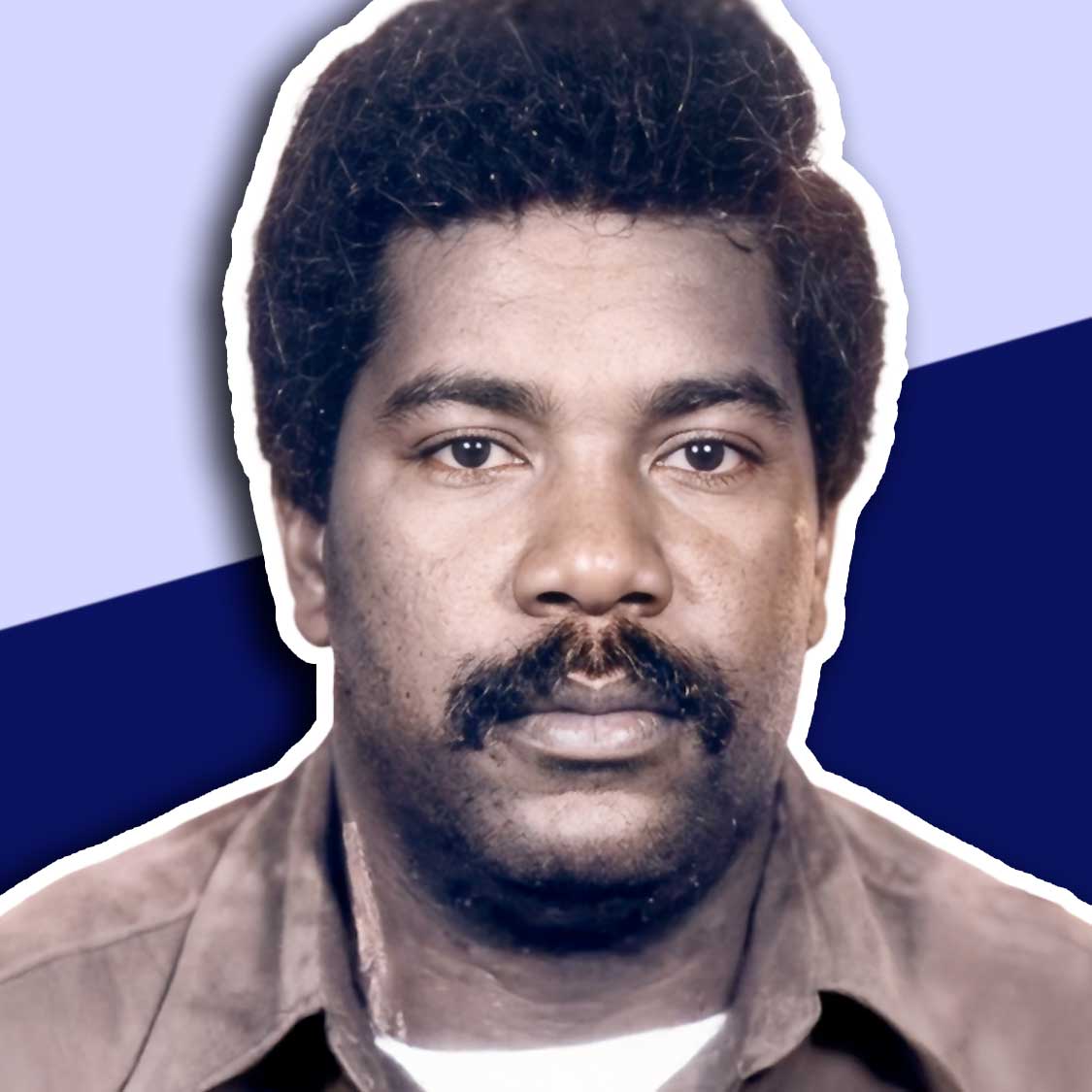
Alvin Baltrop
2026 Icon
Alvin Baltrop
American Photographer
b. December 11, 1948
d. February 1, 2004
“I want people to see these photographs and say, ‘this is something from my time.’”
Alvin Baltrop was a photographer who captured raw and often sexual images of LGBTQ+ subculture during the 1970s and ’80s — a perilous time to be poor and gay in America. Largely unseen until after his death, Baltrop’s work provides pivotal documentation of LGBTQ+ life as lived around the Hudson River’s dilapidated piers, near New York’s Meatpacking District.
Born in the Bronx, Baltrop was the second son of a single mother. He discovered his love of photography in his teens, using a camera his uncle gifted him.
Baltrop honed his eye by observing the lighting in 1930s films and studying prints at the Metropolitan Museum of Art. He started out taking photos at the Stonewall Inn and at Black Power rallies, and he asked friends to pose for him nude. Much of this early work was destroyed when his mother, a devout Jehovah’s Witness, discovered it.
Although Baltrop was sexually fluid, he identified as gay after the Stonewall Riots. He joined the U.S. Navy in 1969 and served as a medic during the Vietnam War. In the service, he remained closeted at first for fear of the consequences, then began photographing other sailors who posed for him clothed and unclothed.
Baltrop was discharged from the Navy in 1972. He attended the School of Visual Arts from 1973 to 1975. During this time, he began capturing both the scene and the architecture along Manhattan’s lower West Side piers. No longer used by the shipping industry and abandoned by the city, the area became a haven for gay cruising, sunbathing, and temporary living.
As Baltrop earned a local reputation as a photographer, he gained the trust of the waterfront LGBTQ+ community. Young men confided in him about their struggles with sexual identity and money.
In the art world, it was different. Baltrop faced harsh discrimination due to his race and sexuality and received no real recognition until midlife, when John Drury nominated him for a Louis Comfort Tiffany Foundation Award in the late 1990s.
This period also brought Baltrop a cancer diagnosis. His poverty and lack of appropriate health care made him vulnerable to exploitation by curators and filmmakers. He died at age 55.
Baltrop’s success arrived posthumously. In 2012, his first major solo exhibition debuted at the Contemporary Arts Museum Houston. The Bronx Museum presented “The Life and Times of Alvin Baltrop” in 2019. Today, his work is in the permanent collections of the Museum of Modern Art and the Whitney Museum of American Art in New York.