2026 Icons
- Giorgio Armani
- Gabriel Attal
- Alvin Baltrop
- Frieda Belinfante
- Michael Bennett
- Rachel Crandall-Crocker
- Barry Diller
- Ernestine Eckstein
- Laïla El-Métoui
- Edward Enninful
- Andrea Gibson
- Marsden Hartley
- Muhsin Hendricks
- Patricia Highsmith
- Robert Joffrey
- Julie Johnson
- Lani Ka’ahumanu
- King James I
- Calvin Klein
- Abraham Lincoln
- Chris Pappas
- Pauline Park
- Paul Rudolph
- Amber Ruffin
- St. Vincent
- Jessica Stern
- Charles Sumner
- Jewel Thais-Williams
- Karl Heinrich Ulrichs
- Alok Vaid-Menon
- Edmund White
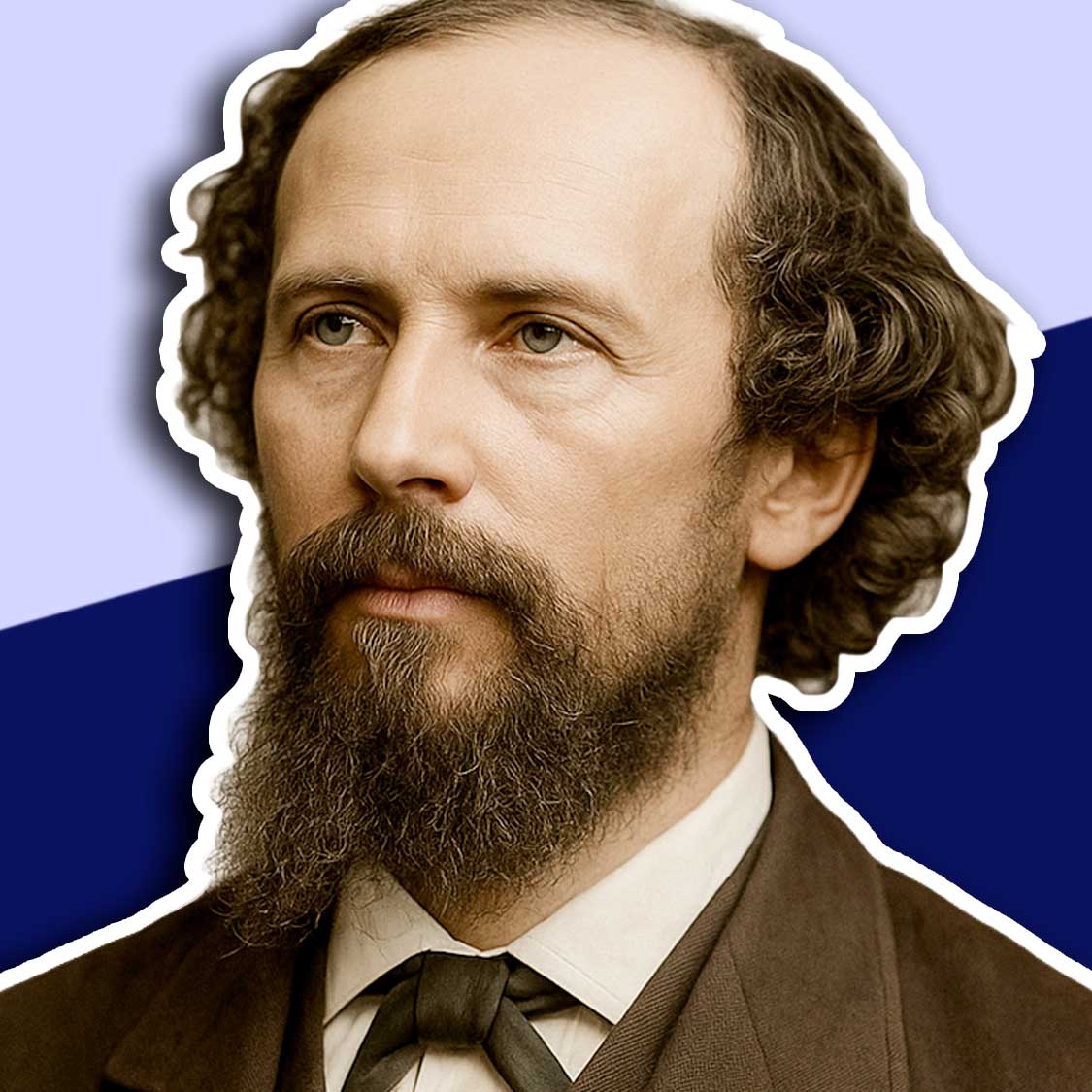
Karl Heinrich Ulrichs
2026 Icon
Karl Heinrich Ulrichs
Sexologist & Gay Pioneer
b. August 28, 1825
d. July 14, 1895
“Indeed, I am proud that I found the courage to deal the initial blow to the hydra of public contempt.”
Karl Heinrich Ulrichs was a pioneering 19th-century sexologist who helped lay the groundwork for the early LGBTQ+ civil rights movement. He wrote extensively about homosexuality and publicly defended his attraction to men.
Born in what is now Lower Saxony, Germany, Ulrichs was attracted to other boys as a youngster. He experienced his first sexual encounter at age 14, when he was abused by his male riding instructor.
Ulrichs graduated from Göttingen University in 1846 with degrees in law and theology and studied history at Friedrich Wilhelm University in Berlin until 1848. After graduating, he practiced law and became an assistant judge in 1853 but was dismissed the following year because of his sexuality.
In 1862, Ulrichs came out to his family and friends. Two years later, under the pseudonym Numa Numantius, he began publishing a series of pamphlets, “Studies on the Riddle of Male-Male Love” (Forschungen über das Rätsel der mannmännlichen Liebe), in which he described same-sex attraction as natural and coined the terms Urning and Dioning — early words for homo and heterosexuals. His writings were banned in Berlin, Saxony, and throughout Prussia. In 1866, Ulrichs was exiled to Bavaria, and his papers were confiscated.
Ulrichs attended the Association of German Jurists in Munich conference, where he argued for the reformation of laws against homosexuality. On August 29, 1867, he became what is likely the first gay person to publicly defend homosexuality. The term “homosexual,” itself, was officially coined by Karl-Maria Kertbeny in a letter to Ulrichs in 1868. Around this time, Ulrichs began publishing under his own name and moved to Stuttgart, where he met regularly with other early gay rights activists.
Ulrichs’s pamphlets inspired emerging sexologists, such as Richard von Krafft-Ebing and Magnus Hirschfeld, who further expanded the field of sexual science. Krafft-Ebing credited Ulrichs when publishing “Psychopathia Sexualis” (1886), and Ulrichs is frequently mentioned in Magnus Hirschfeld’s “The Homosexuality of Men and Women” (1914).
After completing his final pamphlet series in 1879, Ulrichs moved to Italy, believing he had accomplished all that he could in Germany. After settling in L’Aquila, he began writing on the revival of Latin as a universal language. He wrote passionately on the subject for 15 years, publishing the journal “Alaudae” and cultivating a community of readers.
When Ulrichs died at 69, his fans paid for his gravestone. Today, the International LGBTI Law Association presents an annual award in his honor, and streets in Germany and other locations bear his name.