2026 Icons
- Giorgio Armani
- Gabriel Attal
- Alvin Baltrop
- Frieda Belinfante
- Michael Bennett
- Rachel Crandall-Crocker
- Barry Diller
- Ernestine Eckstein
- Laïla El-Métoui
- Edward Enninful
- Andrea Gibson
- Marsden Hartley
- Muhsin Hendricks
- Patricia Highsmith
- Robert Joffrey
- Julie Johnson
- Lani Ka’ahumanu
- King James I
- Calvin Klein
- Abraham Lincoln
- Chris Pappas
- Pauline Park
- Paul Rudolph
- Amber Ruffin
- St. Vincent
- Jessica Stern
- Charles Sumner
- Jewel Thais-Williams
- Karl Heinrich Ulrichs
- Alok Vaid-Menon
- Edmund White
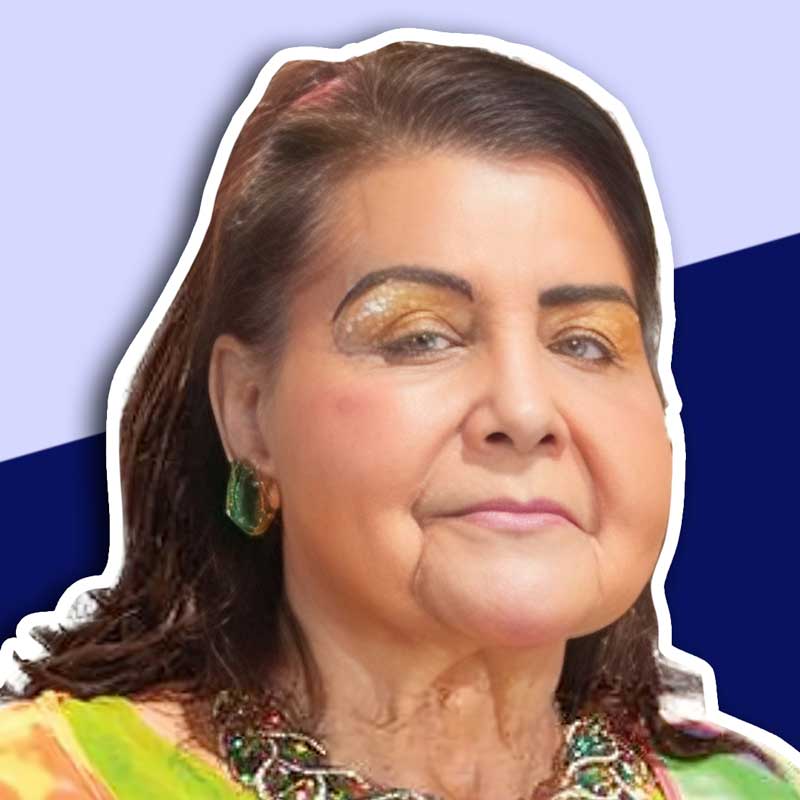
Sir Lady Java
2025 Icon
Sir Lady Java
Trailblazing Drag Star
b. August 20, 1942
d. November 16, 2024
“There was nothing to help us. No one cared. So I had to care, and I kept on …”
Sir Lady Java was a pioneering transgender singer, dancer, comedian, and activist, best known in Los Angeles during the 1960s and ’70s. Her act was considered “female impersonation” at a time when cross-dressing was illegal.
Java was born in New Orleans, Louisiana. With her mother’s support, she transitioned at an early age. She began her career performing in local nightclubs before moving to Los Angeles in the 1960s.
In Los Angeles, Java’s shows attracted both LGBTQ+ and Black fans as well as straight white audiences. Inspired by entertainers like Mae West and Josephine Baker, she was celebrated for her beauty and charisma. She performed alongside prominent Black singers and comedians, such as Little Richard, Sammy Davis Jr., Richard Pryor, and Redd Foxx. She became a darling of the Black press, which helped popularize her act—a mix of comedy, song, and striptease. Sepia magazine dubbed her “America’s loveliest female impersonator,” a tagline she proudly adopted.
In 1967, during one of Java’s shows at Redd Foxx’s nightclub, the LAPD arrived to enforce Rule 9, a municipal ordinance banning “impersonation by means of costume or dress of a person of the opposite sex.” Police threatened to arrest Foxx and shut down his business. In protest, Java picketed outside the club, demanding the right to work. Backed by the ACLU, she filed a lawsuit to overturn the ordinance. Although the case was unsuccessful, LA repealed the law two years later. Her defiance helped pave the way for future transgender rights battles.
Java gradually withdrew from the limelight and stopped performing in the 1980s but continued to appear publicly. She served as guest of honor at the Trans Pride LA festival in 2016 and as Community Grand Marshal for the LA Pride Parade in 2022.
Although Java’s activism predated the Stonewall uprising by two years, she only received due recognition more recently. She died at 82 of a stroke in Los Angeles. The New York Times published her obituary.